

Quick answer
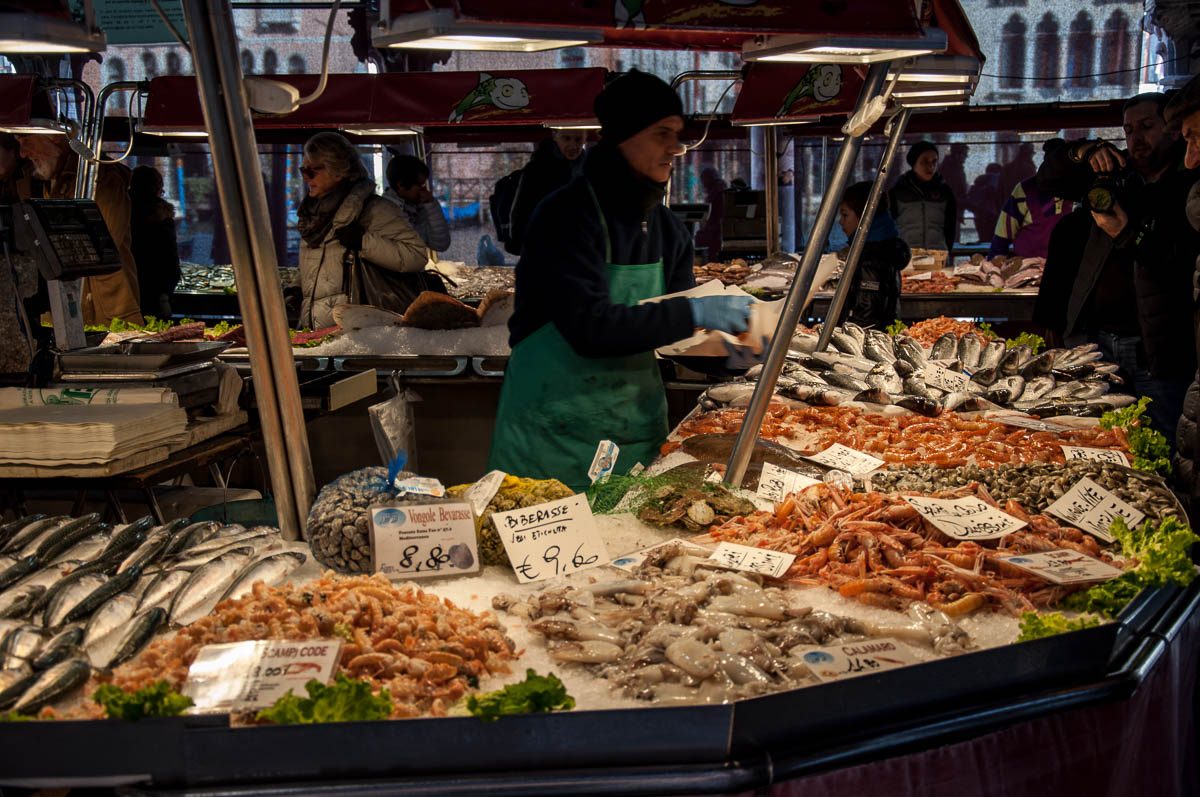
Local food in Venice is anchored by the Rialto fish market, open Monday through Saturday from 07:00 to 14:00, where restaurants and home cooks buy seafood hauled from the Adriatic that morning. The cuisine emphasizes lagoon fish, seasonal vegetables from Sant'Erasmo island, and cicchetti—small plates served in neighborhood bacari. Venetians eat standing at the bar, rarely sit for long meals at lunch, and follow the market calendar rather than menus.
The Rialto fish market has operated on the same site since 1097, and its morning auctions still dictate what appears on Venetian tables that evening. Fishmongers arrange branzino, scampi, moleche (soft-shell crabs), and go—tiny lagoon shrimp no bigger than a fingernail—on ice-filled marble slabs. The market occupies Campo della Pescaria in the San Polo district, free to enter, and closes by early afternoon when the catch sells out. Venetian cuisine is a product of geography. The city has no farmland, so vegetables arrive by boat from Sant'Erasmo, the lagoon's market garden, and proteins come almost exclusively from the sea. Sarde in saor—sweet-and-sour sardines with onions and pine nuts—originated as a preservation method for fishermen's surplus. Bigoli in salsa pairs thick whole-wheat pasta with anchovies and onions. Fegato alla veneziana uses calf liver, one of the few land-based proteins that appears regularly. Polenta, rice from the Po Valley, and stockfish round out the repertoire. Cicchetti culture defines how Venetians eat outside the home. These small bites—baccalà mantecato on grilled polenta, marinated artichokes, folpetti (baby octopus)—are served at bacari, the stand-up bars that line residential neighborhoods away from San Marco. Locals move between two or three bacari in an evening, ordering an ombra (small glass of wine) and one or two cicchetti at each stop. The ritual is called giro de ombre, and it happens before dinner rather than as dinner itself. The produce market adjacent to the fish hall operates on the same schedule and sells what the season allows: white asparagus in spring, zucchini blossoms in summer, radicchio di Treviso in winter. Venetian cooking does not accommodate requests for out-of-season ingredients. When you see carciofi (artichokes) or peas on a menu, they were harvested that week. This is not farm-to-table ideology—it is the only option in a city built on water.
“The morning auctions at Rialto still dictate what appears on Venetian tables that evening.”
The Best Time to Experience Local Food in Venice Markets
To experience the Rialto fish market in full operation while avoiding peak tourist volume, plan your arrival between 07:00 and 10:00. Visiting during this morning window allows you to observe the daily trade before the market transitions into the busier midday period.
Weekday mornings
Low to moderate—
The market functions at peak efficiency, offering the best atmosphere to see local vendors at work.
April and October
ModerateMild, 12°C–20°C
These months offer comfortable temperatures for walking and outdoor exploration without the intensity of summer heat.
November to March
LowCool, 3°C–10°C
Venice is quieter during these colder months, providing more personal space at food stalls and local markets.
Summer months
HighHot, 20°C–30°C
High tourist numbers make early morning arrival essential to maintain access to authentic local food areas.
Verdict: The best time to visit is Tuesday to Thursday during the 07:00–10:00 window in the months of April or October.
Opening Hours for Accessing Local Food in Venice at the Market
The local market area in Venice operates on a consistent schedule throughout the week, remaining closed on Sundays.
| Monday | 07:00–14:00 | |
|---|---|---|
| Tuesday | 07:00–14:00 | |
| Wednesday | 07:00–14:00 | |
| Thursday | 07:00–14:00 | |
| Friday | 07:00–14:00 | |
| Saturday | 07:00–14:00 | |
| Sunday | Closed |
Where to Find Authentic Local Food in Venice
Venice offers a distinct culinary landscape centered on the tradition of cicchetti, small snacks typically enjoyed with a glass of local wine. Exploring the areas surrounding the central markets and hidden backstreets provides access to fresh, authentic ingredients and traditional preparations.
Rialto Market Area
Free entrymarket
Located at Campo della Pescaria, this site serves as the primary source for fresh seafood and seasonal produce. Visitors often gather here to observe the trade before seeking nearby bacari for morning bites.
Cantina Do Spade
€€restaurant
Positioned in the narrow alleys near the Rialto Bridge, this historic venue specializes in classic Venetian cicchetti and seafood dishes. It offers a grounded atmosphere away from the main tourist thoroughfares.
All'Arco
€street
A compact spot located just steps from the fish market, known for its rotating selection of seasonal crostini. It is a favored stop for locals seeking a quick bite and an ombra during the morning hours.
Osteria Al Squero
€€café
Situated opposite the historic San Trovaso boatyard in the Dorsoduro district, this venue allows guests to enjoy cicchetti while overlooking the canal. It provides a quiet setting to experience traditional flavors in a professional, historic environment.
Getting There: Navigating to Local Food in Venice
The local food market is located at Campo della Pescaria, 30125 Venezia VE, Italy. The most efficient way to reach this area is by using the Venice vaporetto water bus system.
ACTV Line 1 to Rialto Mercato stop
ACTV Line 2 to Rialto stop
From Rialto Bridge to Campo della Pescaria
Check availability
Common questions about local food in venice
Everything you need to know about local food in venice